



The right tech suit comes down to three things: the back style your stroke prefers, the coverage cut for your events, and a fit tighter than any training suit you own. Get those right and the suit does its job from the blocks to the wall.
Open Back vs Closed Back
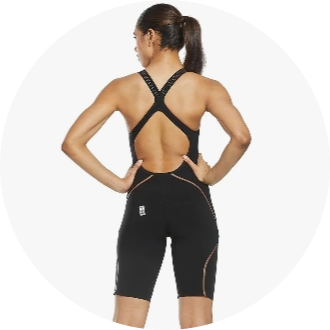
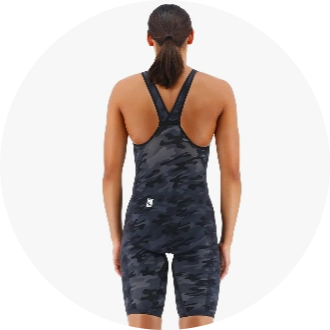
An open back tech suit leaves the shoulder blades uncovered for the widest range of motion, the most popular choice for sprinters and for freestyle, backstroke, and butterfly. A closed back tech suit covers the full back for more core and torso compression and a more stable body line, which some distance and individual medley swimmers prefer. Both styles are FINA-approved, so the choice is about how your stroke feels, not eligibility.
Kneeskin, One-Piece, and Open Water Cuts
-
Kneeskin (neck to knee): The standard women's tech suit. Coverage runs from the neck to just above the knee for maximum compression through the hips and legs, the cut most swimmers race in at championship meets. See women's neck to knee tech suits.
-
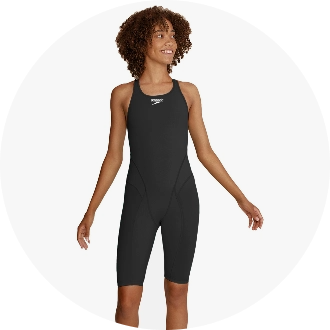
Technical one-piece: A regular swimsuit cut in tech fabric for swimmers who want race-day speed without full leg compression, and the right option for 12-and-under swimmers, where full tech suits are not permitted at USA Swimming meets. See women's technical one-piece suits.
-
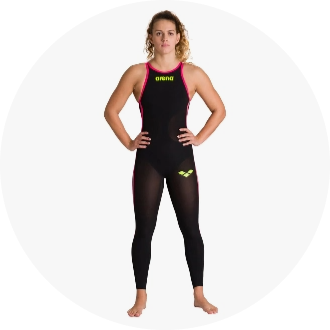
Open water tech suits: Built for open water races and triathlon swims where wetsuits are not allowed, with the same compression and drag reduction in a suit made for longer distances. See women's open water tech suits.
Fit and Sizing
A tech suit should fit far tighter than a training suit. Size by the brand's tech suit chart rather than your practice suit size, and if you fall between sizes, size down. Expect it to take 10 to 20 minutes to put on. Once on, the suit should feel compressive through the hips and legs while still allowing full shoulder rotation; if you cannot bring your arms fully overhead, go up one size. Men's tech suits follow the same approach.
Race-Day Care
Save the suit for meets. Compression fades with use, so most tech suits deliver their best performance for roughly 10 to 20 swims. Rinse in cool fresh water after every race, never wring it out, dry it flat in the shade, and store it flat rather than folded at the seams. For a deeper walkthrough, read the ultimate guide to buying a tech suit, or compare training and racing options across women's competition swimsuits.
Women's Tech Suit FAQs
Are tech suits worth it?
Yes, for swimmers racing at championship meets. The compression and water-repellent fabric reduce drag and support body position, and most swimmers see a measurable drop in their times compared with a training suit. They are not worth it for daily practice, where the compression wears out quickly and a durable polyester training suit does the job.
Are tech suits legal?
Yes, when the suit carries FINA approval, now issued by World Aquatics. Approved suits are eligible at every level of sanctioned competition, from club meets to college championships. Check for the approval mark before buying. The one restriction is age: USA Swimming does not permit tech suits with bonded seams, kinetic tape, or woven fabric for swimmers 12 and under.
At what age should you wear a tech suit?
Swimmers 13 and older may wear tech suits at USA Swimming sanctioned meets. Swimmers 12 and under must race in a suit without bonded seams, kinetic tape, or woven fabric, which is what the 12-and-under racing suits in this collection are built for. Most coaches recommend saving a full tech suit for championship-level meets rather than every race.
How expensive is a tech suit?
Most women's tech suits run from about $100 to $500. The price reflects the fabric technology, bonded seam construction, and compression panels that separate a tech suit from a training suit. Because they are meant for meets rather than practice, a single suit typically covers a full season of championship swims.