

The History of Tech Suits & Considerations When Buying One
March 25, 2024

A tech suit (short for "technical racing suit") is a high-performance swimsuit designed to reduce drag, increase compression, and improve body position in the water — helping competitive swimmers race faster on meet day. In modern swimming, tech suits take the form of a kneeskin for women (neck to knee) and a jammer for men (navel to knee). Swimwear companies have poured thousands of hours and immense resources into testing and research to find the most hydrophobic materials and futuristic technologies to take your performance in the pool to a whole new level.
As a swimmer, you work hard. You wake up early, train multiple times a day, and swim more miles than most people walk in a day — all in the pursuit of swimming as fast as you can on race day. When it comes to race day, you want to know that you are wearing the right technical racing suit on the block.
That being said, the range of prices, technologies, brands, and colors make tech suit options seem endless. Finding the right tech suit can be challenging, even for seasoned pros. Our goal is to help you find the perfect tech suit — one that makes you feel strong, comfortable, and above all, FAST.
At SwimOutlet, we pride ourselves on having the largest selection of tech suits in the world. We have the newest styles and we won't be matched when it comes to range. Our team has worked with the best brands, athletes, and specialists to test the latest suits and curate a collection of the best styles. On top of our best-in-class selection, we provide additional customer support for any questions you may have. Individual preferences may vary — let us help guide you to find the best tech suit for you!
The History of Tech Suits
Pre 2000
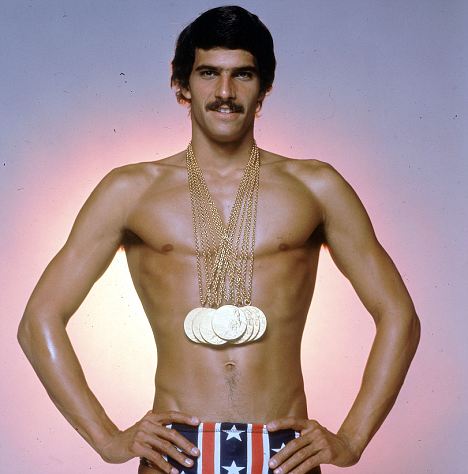
For the majority of the 20th century, swimmers raced in suits that actually hindered performance. Until Speedo introduced nylon suits in 1956, competitive swimming would take place in ill-fitting, heavy suits made from materials such as cotton. Elastane and figure-hugging suits came even later when they were developed in the 1970s. The 1990s saw dramatic improvements, starting with suits that no longer made athletes slower, working towards incredible technological advances that increased speed, compression, and recovery.
2000-2008
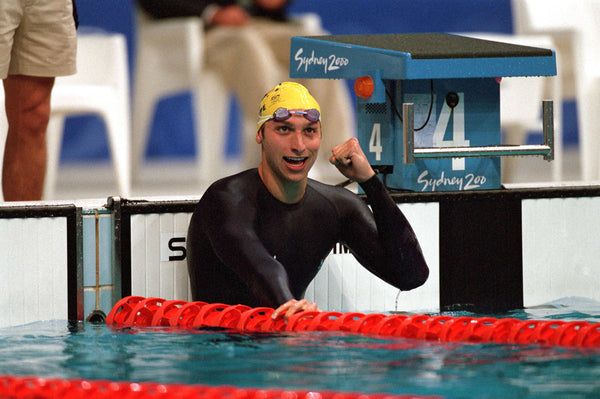
The iconic image of Ian Thorpe at the 2000 Sydney Olympics highlights the dramatic evolution of tech suits by the end of the century. Tech Suits had morphed into full-body suits — encasing athletes from their necks all the way to their wrists and ankles. Suits like Speedo's Fastskin and arena's Powerskin led the way, but even through the 2004 Athens Olympics suits were heavy and thick, with some swimmers like Alex Popov preferring to keep it simple by wearing briefs.
2008
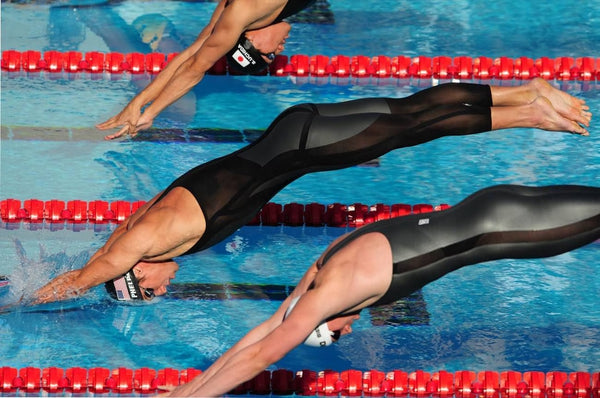
Everything changed in 2008 with Speedo's release of the LZR Racer, famously worn by Michael Phelps as he won a historic 8 gold medals at the 2008 Beijing Olympics. The LZR Racer was the first tech suit that made athletes notably faster, and pushed tech suit development across every front. Its material was not only hydrophobic — creating beads of water that quickly slipped along its surface and prevented friction and absorption — but was also so lightweight and thin that it drew comparisons to paper. It ditched sewn seams in favor of heat bonding, creating an illusion of multiple pieces of fabric being seamlessly blended together while reducing drag. Furthermore, the polyurethane panels were impermeable, trapping air inside the suit to aid buoyancy. The results were astonishing: 94% of all swimming races won at the Beijing Olympics were done so in a LZR Racer, and 23 World Records were broken by athletes wearing the LZR Racer!

2009
As Speedo did intensive research to identify the optimal use of polyurethane — strategic panels covering half of the surface area of the suit — competitor brands like arena, Jaked, and TYR discovered that instead of using polyurethane panels, coating a suit in 100% polyurethane made it even better, and by even bigger margins. If the LZR Racer was a big step in tech suit evolution, then the arena X-Glide, Jaked J-01 and Adidas Hydrofoil were an even bigger step forward.
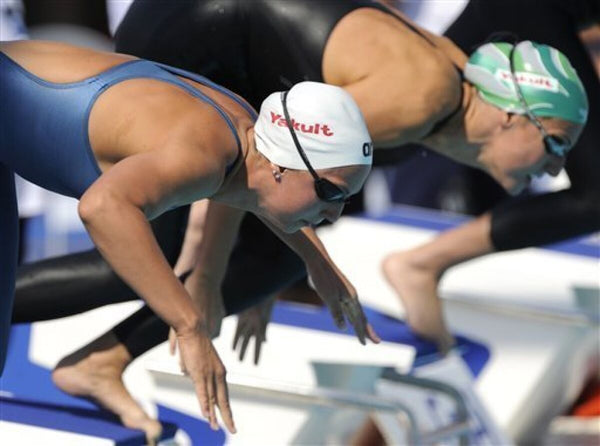
Traditionally, the years following an Olympic Games see slower times and less records getting broken. However, 2009 was far from slow. Even though only 40 events are swum at the World Championships, a staggering 43 world records were broken that year. Overall in 2009, 147 world records were broken… causing FINA (now World Aquatics) to step in and take drastic action.
Post Ban
Starting January 1st, 2010, FINA introduced new tech suit regulations, forever changing the landscape of tech suits. Men are now restricted to wearing only technical jammers, women are restricted to kneeskins (these rules are slightly different for open water swimming where you can still wear bodysuits, just without zippers). Swimwear manufacturers are also limited to only using textile materials; polyurethane coating is no longer allowed. Despite the new regulations, brands have continued to make incredible developments in technology; today's tech suits are the most advanced and ingenious tech suits that have ever existed.
How Much Faster Will a Tech Suit Make Me?
One of the most common questions swimmers ask is whether tech suits actually make a measurable difference — and if so, how much. The answer, backed by both research and experience, is yes.
Studies on modern textile tech suits (post-2010 ban) have found that they reduce passive drag by up to 16% in streamlined positions and active drag by approximately 5% during surface swimming. In real-world terms, this translates to approximately 1–3% improvement in race times. For a 100-yard freestyle swimmer racing at 50 seconds, that's roughly 0.5–1.5 seconds — easily the difference between making a finals heat, hitting a qualifying time, or standing on the podium.
The performance gains come from three main mechanisms:
- Drag reduction — Hydrophobic fabrics and bonded seams create a smoother surface than skin alone, reducing friction as water flows over the body.
- Compression — Strategic compression activates muscles, increases blood flow, and reduces muscle oscillation (vibration), which delays fatigue.
- Body position — The buoyancy and support properties of tech suit fabrics help swimmers maintain a higher, more streamlined position in the water.
It's important to note: a tech suit won't compensate for poor technique or missed training. It amplifies the work you've already put in. The biggest gains come when you combine a well-fitting tech suit with a proper taper, a shave-down (for older swimmers), and sharp race-day execution. For a deep dive into specific suit reviews, see our SwimOutlet Tech Suit Review.
Tech Suit Price Tiers
Tech suits range widely in price, from entry-level options around $100 to flagship elite suits that can exceed $500. Here's how to think about the tiers:
| Tier | Price Range | Features | Best For |
|---|---|---|---|
| Entry-Level | $100–$200 | Knitted fabric, stitched seams, moderate compression | First-time tech suit buyers, age group swimmers, 12 & under compliant, regular meets |
| Mid-Range | $200–$350 | Woven fabric, bonded panels, targeted compression, some taping | High school and club swimmers, championship meets, versatile racing |
| Elite / Flagship | $350–$600+ | Fully bonded seams, multiple fabric zones, advanced taping, maximum compression, dual layering | College, elite, and Olympic-level swimmers; season-ending championship meets |
Budget tip: If you can afford only one tech suit per season, invest in a mid-range option for your regular meets and consider stepping up to a flagship suit only for your biggest championship meet at the end of the season. A brand-new entry-level suit will always outperform a worn-out flagship from last season. Some swimmers also benefit from owning multiple lower-priced suits rather than a single expensive one — especially if you race frequently throughout the season.
Considerations When Buying
With so many variations of tech suits, it might be hard to determine which suit is best for your next race. Key considerations are age, main events, strokes, frequency of competition, and overall comfort and stylistic preferences.
Compression
First, compression is a term you will see tossed around a lot in marketing for different tech suits… but why is it so important? Well, compression helps activate muscles and increase blood flow circulation, which in turn means your muscles will get more oxygen, ultimately increasing endurance and strength throughout the entirety of your race. Your thighs are some of the biggest muscles in your body, and a suit with the right compression can mitigate the feeling of your legs dying towards the end of a race. So, is a higher level of compression always better? Not necessarily. For sprint events, or strokes that require limited leg movement (Freestyle, Backstroke, Butterfly), a higher level of compression may be more suited to your needs — look into brands like Mizuno and TYR when you're selecting a suit. For longer distances and athletes who compete in Breaststroke events, you may need freedom of movement in certain areas. arena, Speedo, TYR, and Mizuno have different suit styles that use different materials in various places, or with varying degrees of compression made to best suit each individual's key needs.
Person's Age
A person's age affects their suit choice for many reasons. If you are 12 & under (also known as U12) you are restricted in what you wear, but even if you are a little bit older, age could add some considerations.
When you first start out in your swimming career, chances are you will try multiple strokes and events until you find your ultimate strengths. You might swim a sprint and distance event within the same meet, or you may swim all four strokes within the same meet. While you work to find what events work best for you, it's important to utilize tech suits that have a broader range of applications: those that boast comfort, longevity, and versatility.
As you start to specialize in key events or strokes — or attend more elite-level swim meets — you might want to consider tech suits that are more elite in nature or crafted for specific strokes and events. That way, you are aligning your tech suit with your specific ambitions.
Age can also be a factor in that age group swimmers are likely to have less muscle mass than older swimmers. As you get older and add a more rigorous land training/weights/gym regimen to your swimming program you may begin to put on more muscle mass. This may lead to you wanting a more compressive suit to help slow down the fatigue of your muscles.
While age does not define the tech suit you should pick, it does add some additional considerations which may help you narrow your focus.
Comfort and Fit
The most important consideration when picking a tech suit is fit. If your suit is baggy, too tight, goes past your knees, or feels uncomfortable, you may not see maximum benefits. SwimOutlet carefully works with each brand to show sizing charts for each tech suit style, but a general rule is to size down from your training suit size. Furthermore, each brand has some additional options for heightened comfort. TYR offers a "Flex Hip" fit for curvier shapes, and both TYR and Speedo offer "Comfort Straps" to relieve some shoulder pressure.
Men's Technical Jammers also come in high waist or standard waist options, while Women's Neck-to-Knee Tech Suits come in open-back and closed-back styles. Open-back styles have similar back and strap construction to wide-strap training suits, while closed-back suits do not have a hole in the back, instead extending the fabric panel higher up the back. Thus, closed-back tech suits offer a higher level of compression and additional reduction in drag. As a result, closed-back tech suits can feel slightly tighter and may be more difficult to put on. For the days when you are racing only one event or sprint distances, you may opt for the increased compression of a closed-back suit. For longer days (that is, days when you may put on and remove your tech suit more frequently), longer races or a higher degree of comfort, open-back tech suits may be a better option for you. Similarly, high-waist jammers provide additional coverage, compression, and core support.
The biggest determining factor in a perfect tech suit is YOU. Do you feel strong and "fast?" Does anything feel too tight (limited mobility, circulation is cut off, etcetera)? If so, maybe try a size up. Conversely, is the material bunching (not flush to the skin), are the leg grippers loose around your knees and is water getting in the suit while you swim? Next time, try going down a size! A good rule of thumb is that you should be able to get two fingers underneath the shoulder straps, and the remainder of the suit should feel tight, compressive, and like it's not moving around on your body at all. You should feel supported, buoyant, and most importantly, fast. Wearing a tech suit should be exciting and make you feel confident and ready to race.
Main Events and Strokes
Middle Distance Suits
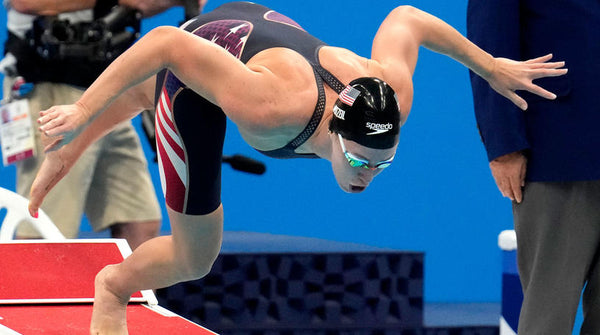
There are two categories of swimmers within "middle distance:" those who specialize in middle distance events at a higher level of competition (likely compete in the 200meter / yard of a stroke and / or the IM), and those who are racing a wide range of events during a competition (think an age group swimmer who will do a lot of back to back races within a weekend meet).
Whether you are racing an IM where you need to excel in every stroke or you are going to be swimming 8 events in one day, you want compression balanced with comfort. Suits that offer targeted zones of materials or taping to help compress certain areas may be a good choice. Other key factors to consider: suits that use one type of material all the way around, or mid-levels of compression. Brands like Speedo and arena are generally top of the pack in this area of swimming, though the Mizuno Neo line may be worth an extra look because of their incredible longevity.

Sprint Suits
If you are a specialized sprinter then you are looking for the utmost compression. While important, comfort becomes less of a priority for races 100 yards/meters or less so, focus on tech suits that boast high levels of compression and strategically placed taping. Taping along the hamstring is also crucial; it creates a "snapback" effect, utilizing the energy created on your down kick to drive your leg up on the upkick. This detail is especially helpful for freestyle or butterfly sprinters. Some brands like Speedo are adding quadricep taping specifically for backstrokers. Mizuno is considered the leading brand in sprint suit technology.
Breaststroke Sprinters
Breaststroke sprinters generally fall into two camps: arm dominated with a high stroke rate and a narrow kick, or leg dominated with a strong kick. If you tend to have an arm-dominated form, you may prefer a high-compression suit like any freestyle, backstroke, or butterfly sprinter. If you are a leg-dominated specialist with a big powerful kick, you may want to look more into the sort of suits we would recommend for a middle-distance swimmer so that you get that extra range of movement.

Distance Suits
If you're a distance swimmer, someone who trains the hard yards and races events over 15 minutes, you need some comfort. You might prefer a low level of compression that will have a smaller but more sustainable effect over longer races. Look for materials that are flexible and lightweight, almost as if you are wearing nothing at all. While all brands have options for distance swimmers, we think Speedo and arena have a great range of these types of tech suits.
Open Water
Something worth noting is that if you are an open water swimmer, male or female, you are able to compete in bodysuits like you could in the 2000s (although they still are confined to textile material and can't have zippers). arena has open-water dedicated bodysuits that all feature low compression and great comfort.

Tech Suit Brands
Aesthetics and Styling of Each Brand
Race day is all about confidence and a suit can certainly play a part in that; both in technology as well as design and aesthetic. Each brand has their own design element that stands out. TYR provides more graphics and patterns. If you like a matte finish with a wide variety of color options, you may want to look into Speedo tech suits. arena tech suits can come in a variety of colors and prints. Mizuno mostly operates in darker, edgier colors and patterns. While we wouldn't recommend picking a suit on aesthetic alone, looking good and feeling good are key elements for a successful race day.
While we are confident that we can help you find the perfect tech suit for your race, that doesn't mean that there is only one perfect tech suit out there for you. Many athletes like different types of tech suits for different races or different levels of competition. Furthermore, as age-group swimmers get older, they might start looking for more elite-level tech suits in which to race. arena, TYR, Speedo, and Mizuno seem to have a similar ideology and that's why they have built a portfolio of different tech suits. We recommend taking some time to learn about each brand's specific styles and technologies.

arena

arena is the only swimwear brand to have utilized carbon fiber in their tech suits. The carbon fiber strands are woven into their suits into either carbon bands (Air2), a carbon cage (Core FX) or a micro carbon cage (Glide). Depending on how carbon fiber is used, you get a different level of compression and flexibility; resulting in great options for everyone. The use of Carbon Fiber definitely separates arena suits from the rest!
Shop Women's Arena Tech Suits →
Shop Men's Arena Tech Suits →
Mizuno
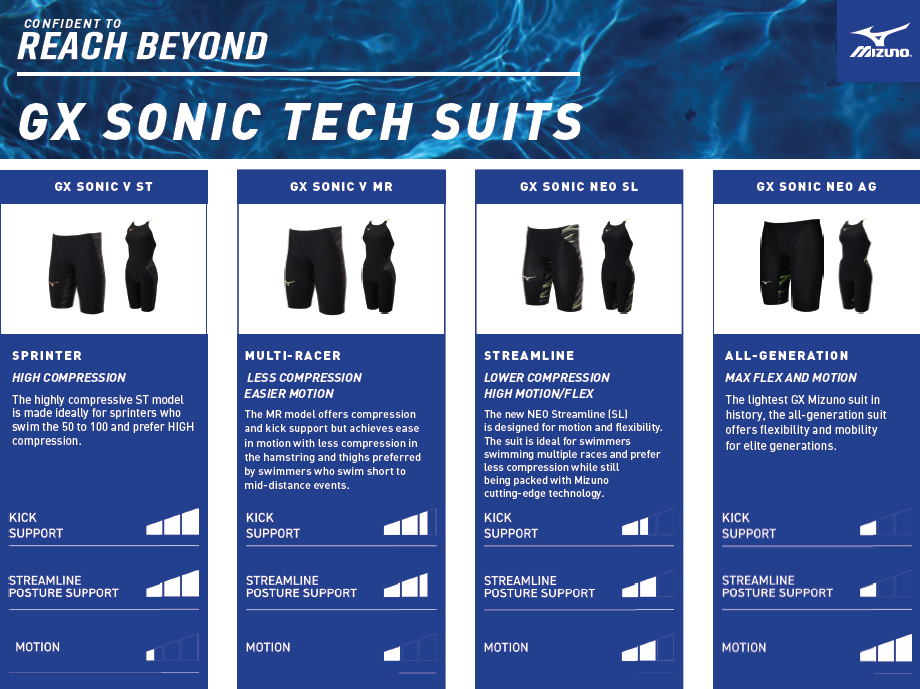
Mizuno tech suits use two main fabrics: the Sonic Ribtex and the Sonic Light. The Sonic Light has three variations (SS, S, and P) of varying degrees of thickness. The Sonic Light fabric is closer to a more traditional paper-like fabric but boasts a special water-repellency treatment that makes it unlike any other tech suit. The Ribtex is a textured fabric that breaks up the water to increase athlete speed. The Ribtex is a much stiffer fabric, elevating compression to new heights. Mizuno tech suit fabrics possess double layers of fabrics, increasing buoyancy in the water.
Some styles feature a SLD-X taping on the hamstrings, which creates a snapback kick effect, thereby allowing the athlete to maintain a high body position in the water and reduce fatigue towards the end of a race. The taping pulls legs back into neutral position after a down kick, not only reducing resistance on the upkick, but also providing additional force and speed. The women's suits further help kick with their WX support around the abdomen of the suit.
Their neo styles are all about more freedom of movement and their women's styles feature t-arch flex shoulder straps. These suits have less lining which overall gives them more stretch.
Shop Women's Mizuno Tech Suits →
Shop Men's Mizuno Tech Suits →
Speedo

Speedo has a clear "elite" level hierarchy with a broad range of tech suits. Their more "elite" level tech suits feature bonded seams, multiple fabric types, and higher fabric compressions. Meanwhile, their entry-level styles offer more comfortable compression, woven fabric, and a combination of bonded panels and stitched seams. If you are a 12 & under swimmer, then the knitted fabric will be compliant with USA Swimming requirements.
Shop Women's Speedo Tech Suits →
Shop Men's Speedo Tech Suits →
TYR
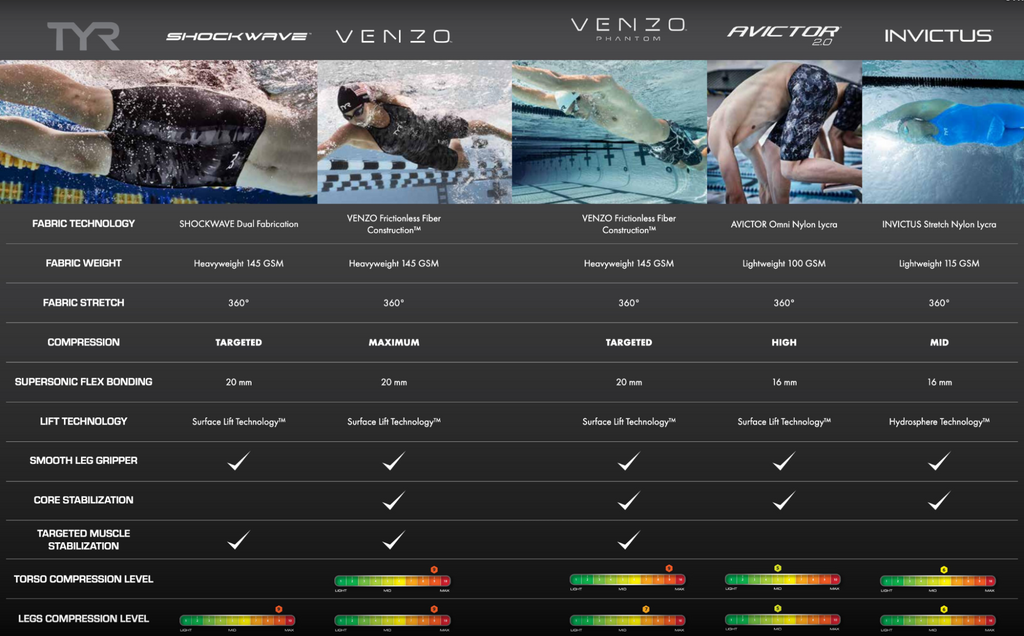
TYR has even more models and has clearly taken several facets of technology into account when building out its wide range of tech suits. You can note that the fabrics have different weights for each style of suit. The heavier fabrics will have less stretch and higher levels of compression than the lighter materials. Also, the suits with thicker flex bonding will use that taping for further snap effect (Shockwave) or targeted compression (Venzo Phantom).
Shop Women's TYR Tech Suits →
Shop Men's TYR Tech Suits →
Tech Suit Do's and Don'ts
No matter which suit you choose to pick up, you want to get the most out of it. The first and easiest way to do this is by getting one that fits properly (too small may lead to tears) and rinsing it off (per instructions) in fresh water after each use (chlorine can damage suits over time). Beyond that you should AVOID when possible warming up and warming down in tech suits; both will dramatically reduce the life of your suit.
Even with the best care, the reality is that over a season of regular meets your tech suit will degrade. The hydrophobic properties of the fabric will fade, and the compression will begin to stretch out. Most elite tech suits have a functional lifespan of approximately 10–15 wears before performance noticeably drops. However, note that while older suits may not be ideal for big race days, they still have some great uses (think specific training sessions or small meets).
For more information on how to properly clean your tech suit, visit our guide on how to care for your tech suit.
We recommend buying a new tech suit at the start of each season. Pick a suit that you can wear to the majority of your meets or races. If you have one big meet at the end of your season, it might be worth it to invest in a new tech suit or even level up to a flagship or elite-level suit to help gain that extra advantage in the water. Even if your budget is more limited, a brand-new suit of any price range will perform better than a worn-out suit from previous seasons!
How to Put on a Tech Suit?
Even the fact that this section exists shows just how difficult, frustrating, and even tiring putting on a tech suit can be, especially if brand new! Each suit has its own nuances and best practices, but there are some general techniques that should be followed.
First, when you get a new suit, try it on before race day in the comfort of your own home. This will give you an understanding of how long it will take to put on so you can be prepared at a swim meet when you might be full of energy and adrenaline! The majority of suits stretch on their first wear, which means that it should be considerably easier to put on each consecutive time.
Secondly, make sure your skin is as dry as possible. If you are still dripping wet from warm up, it will make it a lot harder to get the suit on, so take a towel with you! Once dry, you want to slowly work the suit up your legs. Don't just pull from the top hoping it will just slide all the way up. The further up your thigh it gets, the tighter the fit. Ultimately, you probably have to inch it up little by little. If you are putting on a kneeskin, make sure that the legs are fitted correctly before sorting out the torso; shoulder straps should be last! Give yourself more than enough time and don't rush the process. Be gentle with yourself, as well as with the delicate fabric.
12 & Under Tech Suits
Regulations in the US (as well as Ireland, New Zealand, and Scotland) limit the technology in tech suits for 12 and under swimmers, with the ultimate goal of eliminating some cost-based restrictions to sport accessibility. To level the playing field, suits must have sewn seams and consist of knitted materials. These suits still aid performance, but they also have better longevity than other offerings and allow for a more affordable point of entry to the sport of swimming. To identify these suits, look for a green check in addition to the World Aquatics approved badge or a lack of the badge altogether. SwimOutlet clearly outlines which suits are 12 and under approved for your easy reference while you shop.
Additionally, starting with the 2025/2026 high school swimming season, the NFHS (National Federation of State High School Associations) has introduced updated swimwear regulations. Be sure to check with your state association for the most current rules before purchasing a tech suit for high school competition.

Sustainability and the Future of Tech Suits
One of the biggest and most exciting developments within the world of tech suits is the emergence of recycled and sustainable tech suits. Several brands have taken steps with eco-friendly packaging and materials. arena was first to market with World Aquatics-approved recycled tech suits and has since expanded their eco-friendly assortment. Other brands are following with their own sustainable tech suit developments — an encouraging trend as the industry continues to innovate while reducing its environmental footprint.
Conclusion - What Should I Get?
The tech suit you decide to purchase will ultimately be a personal decision. As long as you have carefully considered the information in this guide, you can be confident in your choice!
In time, you will discover the brands that you like or dislike. And with experience, you will learn which details fit your personal swimming needs. If this is your first time buying a tech suit, prioritize finding one that fits comfortably.
Once you get a tech suit, all that matters is that you feel fast. If the compression feels tight and you like the cut, then you probably made the right choice.
The most important thing is to do your research before making a purchase, and we hope this guide has been helpful in your search. Congratulations on reaching this point, and good luck!
Shop Women's Tech Suits →
Shop Men's Tech Suits →
FAQs
What is a tech suit?
A tech suit (technical racing suit) is a high-performance competition swimsuit designed to reduce drag, compress muscles, and improve body position in the water. Women's tech suits are kneeskins (neck to knee); men's are jammers (navel to knee). They're made from advanced textiles and are intended for race day only — not everyday training.
How much faster will a tech suit make me?
Research shows modern tech suits can reduce drag by up to 5% during active swimming, translating to approximately 1–3% improvement in race times. In practical terms, that's roughly 1–2+ seconds in a 100-yard/meter event. The exact benefit depends on your events, strokes, technique, and how well the suit fits. A tech suit amplifies your training — it won't compensate for poor preparation.
How much do tech suits cost?
Tech suits range from about $100 for entry-level models to $600+ for flagship elite suits. Entry-level suits ($100–$200) use knitted fabrics and stitched seams; mid-range suits ($200–$350) add bonded panels and targeted compression; elite suits ($350–$600+) feature multiple fabric zones, advanced taping, and maximum compression technology.
How long does a tech suit last?
Most elite tech suits have a functional lifespan of approximately 10–15 wears before the hydrophobic properties and compression noticeably degrade. Entry-level suits with knitted fabrics tend to last longer. To maximize lifespan: never train or warm up in your tech suit, rinse in fresh water after each use, and lay flat to dry. For detailed care instructions, see our tech suit care guide.
What size tech suit should I buy?
As a general rule, size down from your regular training suit size. A tech suit should feel tight and compressive but not painful or circulation-restricting. You should be able to slide two fingers under the shoulder straps. The suit should be flush against your skin with no bunching, and the leg grippers should stay secure around your knees. Always check the brand-specific size chart on SwimOutlet, as sizing varies between brands.
What's the difference between open-back and closed-back tech suits?
Open-back kneeskins have a traditional back opening with shoulder straps, similar to a training suit. They're easier to put on and more comfortable for long meet days. Closed-back kneeskins extend the fabric panel higher up the back with no opening, providing more compression and less drag — but they're harder to put on and feel tighter. Choose closed-back for maximum performance in sprint events; open-back for comfort during longer meets with multiple races.
Can 12 and under swimmers wear tech suits?
Yes, but with restrictions. USA Swimming (and several other national federations) limits 12 and under swimmers to tech suits with sewn seams and knitted materials. These suits still improve performance but are more affordable and durable than elite-level options. Look for the green check or 12 & under designation when shopping. Visit our 12 & Under Tech Suit page for approved options.
This guide is written and maintained by the SwimOutlet swim team in collaboration with brand specialists and competitive swimmers. Tech suit technologies and offerings evolve each season — we update this guide regularly to reflect the latest developments. For detailed individual suit reviews, see our SwimOutlet Elite Tech Suit Review. For brand-specific comparisons, explore our Speedo tech suit comparison guide. For race-day preparation beyond your suit, check out our swim meet nutrition guide and swimming rules guide.