
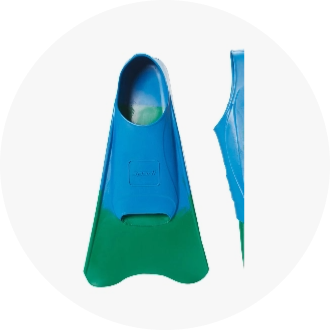
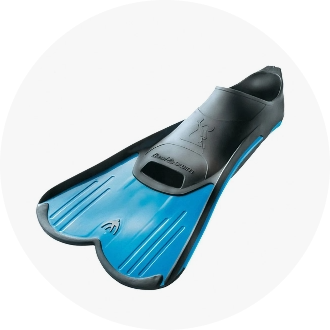
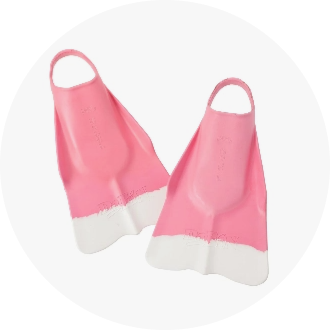
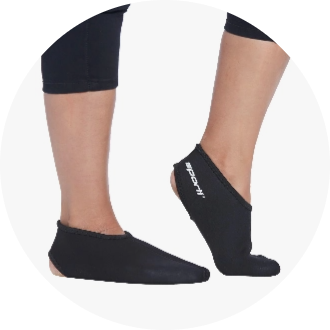
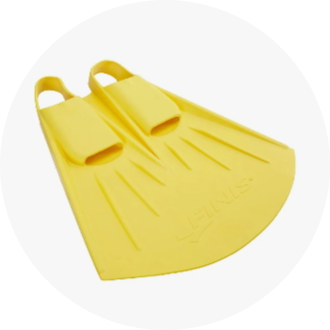
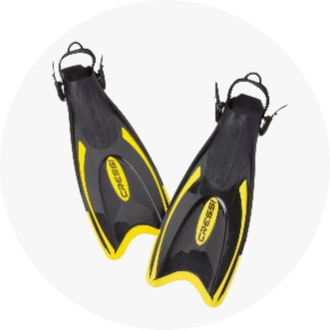
A swim fin increases propulsion through the water, builds leg strength, and lets swimmers hold stroke technique without breath fatigue. Swim fins and swimming flippers on this page run from short-blade training fins for sprint and kick-set work to long-blade fins for endurance and recreational swimming, plus monofins for dolphin kick. The right pair comes down to blade length, kick style, foot-pocket fit, and how often the fins sit in chlorinated water.
Blade Types and How to Choose
- Short-blade training fins: A 3-inch to 5-inch blade for sprint workouts, kick sets, and race-pace leg power. Easier to turn over at high tempo than long blades, which is why they are the most common training fin on the pool deck.
- Long-blade fins: A larger surface area moves more water per kick for propulsion and aerobic base work. The usual pick for snorkeling, open water, and recreational swimming rather than race speed.
- Monofins: A single blade that joins both feet for dolphin kick and underwater speed. Used by competitive swimmers refining butterfly and fly-kick technique. Browse dedicated monofins for that work.
Fins for Kids and Adults
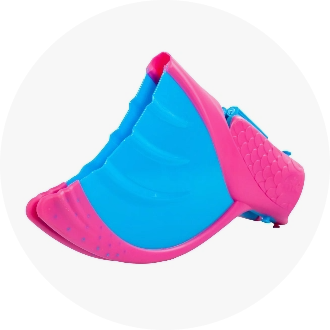
Adult fins size to your regular shoe size on most closed-heel and adjustable models. Kids' fins use age or shoe-size brackets and favor a softer blade that is easy to kick, which makes them a good aid for learning to swim and building water confidence. Closed-heel fins give a snug fit for training; open-heel and adjustable fins leave room to grow.
Sizing and Care
Pair fins with a kickboard for isolated leg sets, or with swim paddles for full-body resistance. Rinse in cool fresh water after every swim, store out of direct sun, and check the foot pocket for cracks each season. A silicone fin holds up to two to four years of regular training; softer rubber compounds last one to two seasons.