
Swim Workouts for Beginners: Three Structured Sessions
January 22, 2025

Key Takeaways
- Target 20–40 minutes per session. Quality beats duration. 20 minutes of controlled swimming builds more fitness than 60 minutes of exhausted thrashing.
- One lap equals 25 yards in most US pools. Two laps equal 50 yards (down and back).
- Warm-up, main set, cool-down. Every good swim workout follows this structure.
- Use a kickboard, fins, and pull buoy freely as a beginner. Training aids accelerate progress, they are not cheating.
- Freestyle, breaststroke, backstroke are enough. Alternate between them to rest different muscle groups. Butterfly can wait.
- Increase distance by no more than 10% per week. Progressive overload prevents the shoulder injuries that sideline most beginners.
Before You Start: Gear, Terminology, and Strokes
The minimum gear list
A swim workout does not require much equipment, but a handful of items make a significant difference in how much progress a beginner makes.
- Swim goggles. Non-negotiable. Goggles protect the eyes from chlorine, allow clear sight of the wall and other swimmers, and make breathing rhythm much easier to develop.
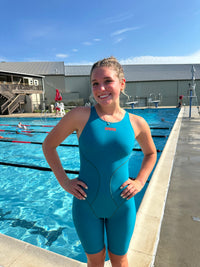
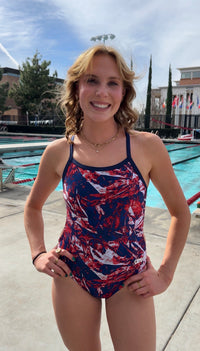
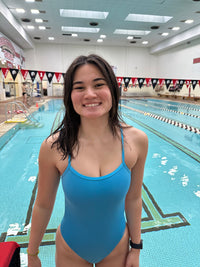
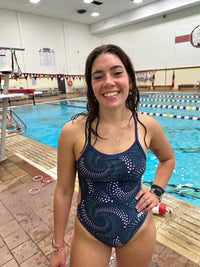
- Form-fitting swimsuit. Board shorts and casual swimwear create drag that slows swimming and wastes effort. A fitted competition or training suit cuts that drag significantly. See the best swimsuits for women guide for recommendations.
- Swim cap. Optional but helpful. Keeps hair out of the face, reduces drag, and can extend the life of goggles. Silicone caps are the most popular for recreational and fitness swimmers.
- Kickboard. Highly recommended. Isolates the kick, builds leg strength, and gives the arms a break between swim sets. See the kickboard guide for sizing.
- Swim fins. A confidence booster for beginners. Extra propulsion lets the swimmer focus on technique rather than struggling to stay above water. The fin guide covers short-blade vs long-blade fin selection.
- Pull buoy. A foam float held between the thighs. Lifts the hips, isolates the upper body, and helps beginners whose legs tend to sink. Browse all training tools at the swim gear collection.
Swim workout terminology, explained
Standard swim workout language can feel like a different sport. The core terms:
- Lap vs. length. In this guide, one "lap" equals one length of the pool (typically 25 yards in most US pools). Two laps equal 50 yards (down and back).
- Set. A group of swims done together. "4 x 50" means swim four 50-yard efforts.
- Rest interval. The amount of rest between swims in a set. ":20 rest" means take 20 seconds before the next one.
- Warm-up. Easy swimming at the start to raise heart rate and loosen muscles.
- Main set. The core of the workout where the real work happens.
- Cool-down. Easy swimming at the end to bring heart rate down and promote recovery.
- Kick. Swimming using only the legs, usually with a kickboard.
- Drill. A focused exercise that isolates one part of a stroke to improve technique (single-arm freestyle, catch-up drill, fingertip drag).
Stroke selection and technique fundamentals
For the first several workouts, focus on alternating between three strokes:
- Freestyle (front crawl). The primary stroke. Fastest, most efficient, works the entire body. This is where most workout time goes.
- Breaststroke. A slower-paced stroke with the head above water between breaths. Good as a recovery stroke when freestyle fatigue hits.
- Backstroke. Face stays above water so breathing is never an issue. Works different muscle groups than freestyle, giving the shoulders a break.
Switching strokes during a workout is a smart strategy, not a sign of weakness. It keeps the shoulders healthy, engages different muscle groups, and prevents burnout. Even Olympic swimmers train multiple strokes. Five technique rules cover almost everything that matters early on:
- Breathe out underwater. The most common beginner mistake is holding the breath. Exhale steadily through nose and mouth while the face is in the water, then inhale quickly on the head turn.
- Keep the body horizontal. Head position controls body position. Look down at the bottom of the pool (not forward) to keep hips and legs near the surface.
- Long, smooth strokes. Resist the urge to windmill. Reach forward with each stroke and pull all the way through. Fewer, longer strokes beat many short, choppy ones.
- Kick from the hips, not the knees. A good flutter kick originates from the hip with relatively straight legs and relaxed ankles.
- Relax. Tension is the enemy in the water. Relax the grip (no clenched fists), relax the neck, let the water support the body.
For deeper stroke work, read the advice for new swimmers guide.
Three Beginner Swim Workouts (Progressive)
These workouts are structured in three tiers. Start with Workout 1 and progress to Workout 3 as fitness and comfort improve. Each follows the warm-up, main set, cool-down structure that every well-designed swim workout uses.
General guidelines: take as much rest as needed between sets, use fins or a kickboard any time extra support helps, focus on technique over speed, and if any set feels too long, cut it in half. If it feels too easy, add a repeat.
Workout 1: The Foundation (approximately 700 yards / 28 laps)
For swimmers who are truly just starting out. The goal is building water comfort, establishing a breathing rhythm, and beginning to build endurance. Not swimming fast or far.
Warm-up (200 yards)
- 50 yards easy swim (2 laps), any stroke that feels comfortable
- 150 yards kick with a kickboard (6 laps), focus on relaxed steady kicking from the hips
Main set (~400 yards)
- Repeat 50-yard swims (2 laps each) at moderate, comfortable pace with 20 to 30 seconds rest between each 50
- Continue for 20 to 30 minutes, or until fatigued, whichever comes first
- Alternate between freestyle and breaststroke as needed for recovery
Cool-down (100 yards)
- 100 yards easy swim (4 laps), slow relaxed strokes to bring the heart rate down
Workout 2: Building Structure (approximately 900 yards / 36 laps)
Once continuous 50s feel comfortable, Workout 2 introduces drills. Focused exercises that improve specific parts of a stroke. Drills are where real technique improvement happens and they are a staple of every competitive swimmer's training.
Warm-up (200 yards)
- 100 yards easy swim (4 laps)
- 100 yards kick with a kickboard (4 laps)
Main set (600 yards)
- 8 x 75 yards (3 laps each), alternating: Lap 1 = kick, Lap 2 = drill of choice, Lap 3 = full stroke swim
- Take 15 to 20 seconds rest between each 75
Cool-down (100 yards)
- 100 yards easy swim (4 laps)
Workout 3: Stepping It Up (approximately 1,200 yards / 48 laps)
Workout 3 introduces pace variation, swimming at different speeds within the same session. This builds cardiovascular fitness more effectively than swimming everything at one pace, and it is how competitive swimmers train.
Warm-up (200 yards)
- 200 yards easy swim (8 laps), mix freestyle and backstroke
Main set (900 yards, fins optional)
- 300 yards swim at moderate pace (12 laps), steady effort, controlled breathing
- 30 seconds rest
- 3 x 100 yards kick (4 laps each, 15 seconds rest between each 100), strong, purposeful kicks
- 30 seconds rest
- 6 x 50 yards at sprint pace (2 laps each, 20 seconds rest between each 50), push hard but maintain form
Cool-down (100 yards)
- 100 yards easy swim (4 laps)
The carousel below shows the training gear referenced in these workouts: kickboard, fins, pull buoy, and goggles. Every item is a best-seller in its category with hundreds of verified customer reviews.
Building a Sustainable Swimming Routine
The biggest mistake beginners make is not swimming too little. It is doing too much too soon, getting injured, and quitting. A sustainable routine has five rules.
- Start with 2 to 3 swims per week. Rest days between swims allow the body to recover and adapt. Avoid swimming every day in the first month.
- Increase distance by no more than 10% per week. Same progressive overload principle used in running. Gives muscles, tendons, and cardiovascular system time to adapt without injury.
- Consistency beats intensity. Swimming 20 to 30 minutes three times a week is far more effective than one exhausting 90-minute session followed by a week of recovery.
- Rotate the three workouts above. Alternating prevents boredom and trains different energy systems. As fitness improves, increase distances and decrease rest intervals.
- Consider joining a Masters swim program. U.S. Masters Swimming clubs exist in nearly every city and welcome swimmers of all levels, including complete beginners. Coached workouts, technique feedback, and a community that keeps people accountable.
Pool etiquette every beginner should know
Lap swimming has unwritten rules that will help any newcomer feel comfortable at any pool.
- Choose the right lane. Most pools label lanes by speed (Fast, Medium, Slow/Leisure). Start in the slow lane. There is no ego in swimming and matching the lane to actual speed is courteous to everyone.
- Circle swim when sharing. If two or more people share a lane, swim in a counter-clockwise circle (right side going down, left side coming back). A tap on the foot signals a desire to pass.
- Rest at the wall, not in the middle. When stopping for a break, move to the corner of the lane at the wall so other swimmers can turn without obstruction.
- Do not push off the wall into someone's path. Check the lane is clear before starting a new lap.
FAQs About Beginner Swim Workouts
How many laps should a beginner swim?
Start with 4 to 8 laps (100 to 200 yards) for the very first session, and build from there. A typical beginner workout totals 400 to 700 yards. Endurance builds over weeks to 1,000+ yards per session. Consistency matters more than distance on day one.
How long should a beginner swim workout last?
Aim for 20 to 40 minutes including warm-up and cool-down. In the beginning, 20 minutes of actual swimming may be plenty. As fitness builds, extend sessions to 30 to 45 minutes. Quality (good technique with appropriate rest) matters more than time spent.
What if I cannot swim a full lap without stopping?
Completely normal and perfectly fine. Break the lap into smaller segments. Swim halfway, hold the wall or stand up, catch breath, and finish the length. Fins add propulsion and backstroke makes breathing easier. Many successful swimmers started exactly this way.
Is swimming good for weight loss?
Yes. Swimming burns 400 to 700+ calories per hour depending on intensity and body weight, and it engages nearly every muscle group. Because it is low-impact, frequent swimming is possible without the joint stress that running or high-impact exercise creates, making a consistent routine easier to maintain.
Do I need to know all four strokes?
No. Freestyle alone is enough for a complete, effective workout. As comfort grows, adding breaststroke and backstroke gives variety and works different muscle groups. Butterfly is the most advanced stroke. Save it for later, or never. Many lifelong swimmers rarely swim butterfly.
Should I wear anything under my swimsuit?
No. Swimsuits are designed to be worn directly against the skin. Underwear underneath adds drag, holds water, causes chafing, and interferes with the suit's quick-dry properties.
Can I use a kickboard and fins in every workout?
Yes. For beginners, training aids are not cheating. A kickboard isolates the kick and builds leg strength. Fins give extra propulsion so the swimmer can focus on stroke mechanics without struggling to stay above water. Use them freely in all three workouts above. As fitness improves, gradually reduce reliance on them.
How often should a beginner swim per week?
Two to three times per week, with at least one rest day between swims. More frequent sessions increase the risk of shoulder injury, which is the most common reason beginner swimmers quit. After 6 to 8 weeks of consistent training, swimming four times per week becomes manageable.
How We Built This Guide
Workout structures reflect the standard warm-up, main set, cool-down format used by USA Swimming, U.S. Masters Swimming, and competitive swim programs across the country. Distance progressions follow the 10% weekly increase rule established in endurance training research. Gear recommendations reflect customer reviews, return rates, and sales performance across the SwimOutlet catalog.