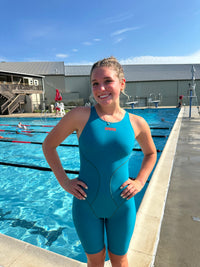


Wetsuits for swimming, triathlon, open water, and pool training, with neoprene thickness from 1.5mm warm-water tops to 5mm cold-water full suits. Full-length, sleeveless, and short-arm cuts across recreational lap swim, race-day triathlon, and lifeguard use. Triathlon and open water specialists include Blueseventy, HUUB, Zone3, Roka, 2XU, and Xterra; recreational and watersports brands include Cressi, Body Glove, O'Neill, and TYR, with men's, women's, and youth cuts at $99 through $850 price points.
Wetsuits are neoprene swim and watersports suits engineered to retain body heat, reduce drag, and add buoyancy in cool to cold water. The catalog spans swim-specific cuts for triathlon, open water, and recreational lap swim through watersports cuts for surf, paddle, and recreational ocean use. Thickness ranges from 1.5mm warm-water tops through 5mm cold-water full suits, with sleeveless, short-arm, and full-sleeve options matched to water temperature and activity.
Choosing a Wetsuit by Activity
-
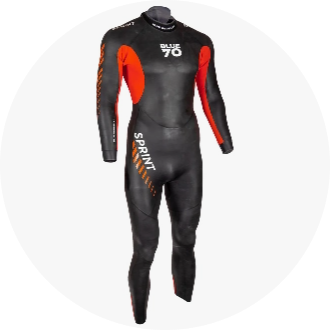
Triathlon and Open Water Swimming: Flexible suits with thinner neoprene in the shoulders (1.5 to 2mm) for unrestricted stroke movement and thicker buoyant panels (3 to 5mm) on the chest and legs to add lift. Blueseventy, HUUB, Zone3, and Roka build their catalogs around this category. See the triathlon and open water collection for the full catalog.
-
Pool Swimming and Lap Training: Lighter 1mm to 2mm sleeveless or short-arm suits add warmth without restricting stroke mechanics, the option for indoor pool training in cooler water and outdoor pools in shoulder season.
-
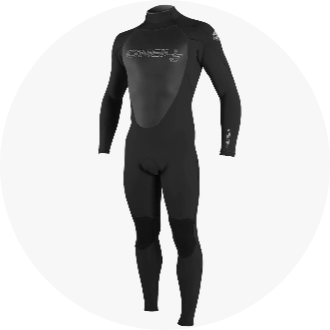
Recreational Ocean and Surfing: Durable 3/2mm or 4/3mm suits handle wave impact and longer cold-water sessions. O'Neill, Xcel, and Body Glove dominate this category.
-
Lifeguard and Watersports Use: Sleeveless and short-arm suits with reinforced abrasion panels, designed for repeated water entry and extended duty cycles.
Wetsuit Thickness and Water Temperature
Wetsuit thickness is rated in millimeters, usually shown as two numbers like "3/2" (3mm body, 2mm arms for flexibility). For warm water above 75°F, a 1mm to 2mm sleeveless or short-arm suit is enough. For cool water 60°F to 75°F, a 2/2 or 3/2mm full suit is standard for swimming and triathlon. For cold water below 60°F, a 4/3mm or thicker suit handles longer exposure, often with sealed seams for additional warmth. Triathlon-specific wetsuits prioritize flexibility and buoyancy over maximum insulation, so a triathlon 3/5 reads as 3mm in the shoulders for stroke movement and 5mm in the chest and legs for added lift.
Full Suits vs Shorty and Sleeveless
-
Full Suits: Long sleeves and full-leg coverage, the standard pick for cold water and longer sessions. See men's fullsuit wetsuits for the full-sleeve catalog.
-
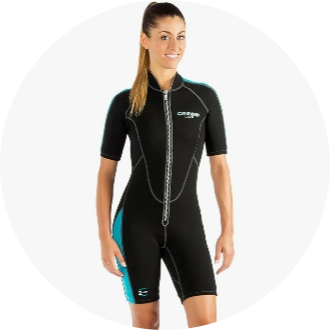
Short-Arm and Spring Suits: Short sleeves with full or short legs, the option for shoulder-season water and warmer climates. Pairs flexibility with moderate thermal coverage.
-
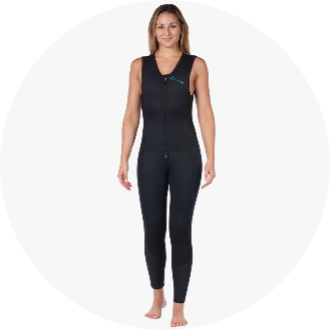
Sleeveless Tops and Long Johns: Sleeveless construction that adds chest and core warmth without restricting shoulder rotation. The standard pick for triathlon and pool training where stroke mechanics matter more than thermal coverage.
Brands and Price Tiers
Triathlon and open water specialists like Blueseventy, HUUB, Zone3, Roka, and 2XU make purpose-built swim wetsuits from $200 to $850 with race-day flexibility and buoyancy paneling. Cressi and Body Glove dominate the recreational and snorkeling catalog at $99 to $200 price points. O'Neill, Xcel, and Level Six cover surf and watersports use at $150 to $400, with cold-water sealed-seam construction in the higher tiers. For zipper choice between back-zip and chest-zip construction, see the back-zip vs chest-zip guide.
Men's, Women's, and Youth Cuts
Men's wetsuits run extra room in the chest and shoulders with narrower hips; women's wetsuits run extra room through the bust and hips with shorter torso length. Both gender-specific fits matter for swimming performance since a wetsuit that fits poorly through the torso restricts stroke mechanics. For women's-specific cuts, see women's wetsuits. For the deeper buying guide, see how to choose a triathlon wetsuit.