
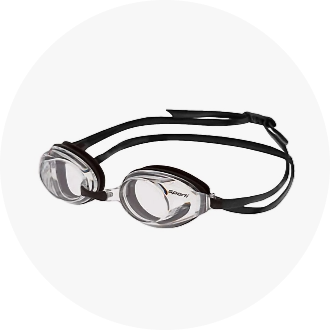
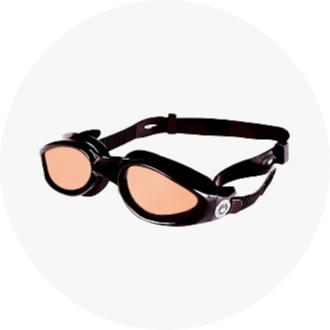
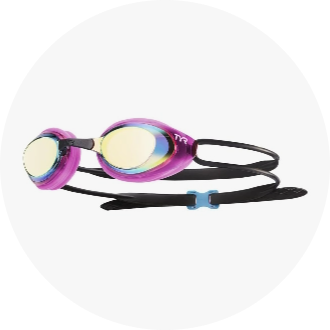
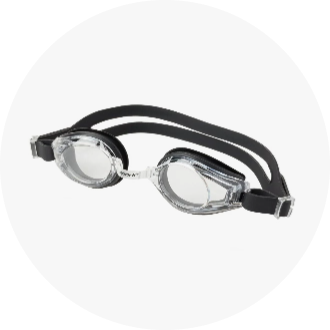
Swimming Goggles
A swim goggle seals out chlorine and salt water so you can track the wall, the lane line, or another swimmer. Swim goggles and swimming goggles come in a handful of frame styles and lens tints, each built for a specific pool environment, sun condition, or race distance. The right pick comes down to gasket profile, lens tint, frame fit, and how often the pair sees outdoor light.
Goggle Types Explained
-
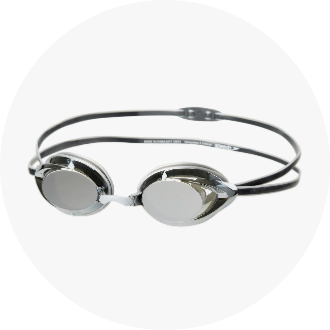
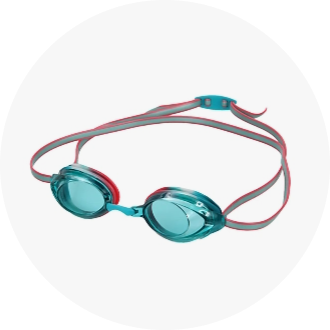
Competition Goggles: Low-profile gaskets that seal tight inside the eye socket for minimum drag and quick turns. The standard pick for sprint racing, swim meets, and high school through college level competition. See competition swim goggles for race-day silhouettes from Speedo, TYR, and Arena.
-
Training Goggles: Wider, softer gaskets for daily lap swimming where comfort matters more than the fastest seal. Built for 4 or more pool sessions per week and the right pick for masters, fitness, and adult lap programs. Costs $10 to $25 per pair and lasts 12 to 18 months of regular use.
-
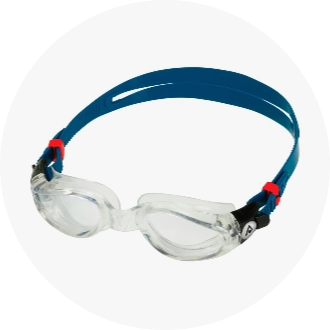
Open Water Goggles: Larger curved lenses with a panoramic field of view to spot buoys and other swimmers from 10 to 50 yards out. The standard pick for triathlon, ocean swims, and lake training. See open water swim goggles for masks and triathlon-specific shapes.
-
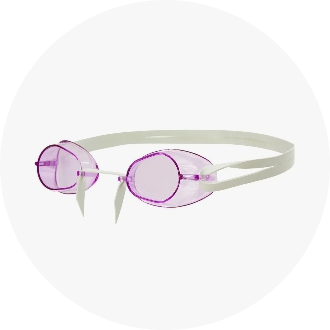
Swedish Goggles: Minimalist split-eye goggles that the swimmer assembles with cord straps, nose bridges, and gaskets sold separately. The smallest profile on the market, used by sprinters and traditionalists. See Swedish goggles for assembly kits and replacement parts.
Lens Tints for Indoor and Outdoor Pools
-
Clear Lenses: Maximum visibility for indoor pools and low-light open water swimming. The standard pick for early-morning practice, evening lap swim, and any pool without overhead skylights.
-
Smoked and Tinted Lenses: Cut bright overhead lights and surface glare for outdoor lap swimming. Versatile across both indoor and outdoor use, the most popular tint for swimmers who train across pool environments.
-
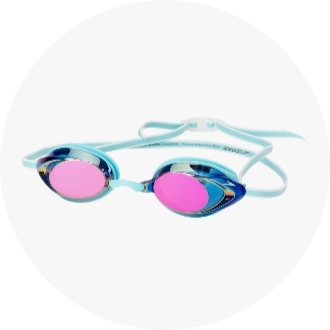
Mirrored Lenses: Reflect the most light, the strongest pick for sunny outdoor pools and triathlon swims in full sun. Sporti, Speedo, TYR, and Arena all offer mirrored options across racing, training, and open water frames.
-
Polarized Lenses: Cut horizontal glare from waves and water surface, the strongest pick for open water training and triathlon racing in full sun. Adds $10 to $25 to the price of a standard mirrored pair.
-
Photochromic Lenses: Darken in sunlight and clear up indoors. Built for swimmers who train across indoor pools and outdoor pools or open water without wanting to swap pairs between sessions.
Goggles for Adults, Women, and Kids
Adult goggles fit most teenage and adult faces with adjustable nose bridges and split straps. Women's goggles use a narrower frame and softer gasket for smaller face shapes, often labeled "femme fit" or "ladies fit" on the product page. See kids' swim goggles for smaller frames sized for youth and junior heads, mostly in silicone gaskets with single-strap designs that small hands can adjust without help. Junior racing frames come in sizes for ages 6 and up, with shatter-resistant lenses standard for the youngest swimmers and bright color options for easy visibility in a busy pool.
Prescription and Specialty Goggles
Swimmers who need vision correction can match standard racing frames with diopter lenses in -1.5 to -8.0 strengths for nearsightedness and +1.5 to +6.0 for farsightedness. See prescription swim goggles for the full diopter range, including step-diopter lenses, optical inserts that fit standard racing frames, and custom-cut lenses for prescriptions outside the standard step range. Match the diopter strength to the spherical correction on a glasses prescription, rounding to the nearest available step. The prescription goggle guide on the site includes a diopter conversion calculator for direct prescription-to-goggle matching.
Fit, Anti-Fog, and Care
Press the goggle into the eye socket without the strap. A correctly sized pair will stick for one to two seconds by suction before falling off. To prevent fogging, rinse new goggles in fresh water before the first swim and avoid touching the inside of the lens. When the factory anti-fog coating wears off after 6 to 9 months, apply anti-fog spray or a thin film of baby shampoo to the inside of each lens. Rinse with fresh water after every swim and store in a hard case to protect the lens coating. A well-cared-for pair lasts 12 to 18 months of daily training; silicone gaskets stay flexible for years, latex gaskets harden within 12 months. Replace any goggle when the gasket stops sealing or the lens develops a scratch that obstructs vision.